TL;DR
Learn what virtual legal assistant services include, what to delegate first, and where attorney supervision is required.
Use a practical cost framework to compare full-time hires, fractional support, and task-based legal back-office models.
Apply a compliance-first operating model grounded in ABA supervision rules, privilege controls, and documented workflows.
Launch in 30 days with SOPs, QA checkpoints, and role design that protects billable attorney time.
Table of Contents
- What do virtual legal assistant services include for US law firms?
- How much do virtual legal assistant services cost for a US law firm?
- Are virtual legal assistant services ethical and compliant in the US?
- Which legal tasks should you outsource first to a virtual legal assistant?
- How do you implement virtual legal assistant services without disrupting your firm?
- Final Thoughts
US law firms are under pressure from both sides: clients expect faster updates and predictable fees, while internal teams are stretched by intake volume, admin work, and billing delays. Partners know the problem is not a shortage of legal judgment. The problem is that too much attorney time gets consumed by repeatable operational work.
That is why demand for virtual legal assistant services continues to grow. Firms are using remote legal support to protect billable capacity, standardize workflows, and improve client experience without overhiring in-office staff. If you are evaluating where this fits in your firm, start with HireSava's legal industry page to benchmark service models and role coverage.
This guide gives you an operating framework, not a hype pitch. You will see what these services include, what they cost, what compliance boundaries matter, which tasks to outsource first, and how to implement in a way that reduces risk instead of adding it. If you already read our breakdown on Paralegal vs. Legal Assistant for US Companies, this article goes one step further by showing how to build a full service lane around those roles.
What do virtual legal assistant services include for US law firms?
Virtual legal assistant services typically combine administrative legal support, client-facing coordination, and controlled pre-billable workflow execution under attorney supervision. Most firms start with intake, scheduling, document handling, and billing support, then expand into specialized support like discovery prep and docketing.
At a practical level, these services are not one job title. They are a service layer with several role types:
- Legal administrative assistant (calendar, email triage, filing logistics)
- Intake and client communications coordinator
- Billing and timekeeping support specialist
- Document workflow assistant (templates, formatting, packet assembly)
- Docket and deadline tracking assistant
The simplest way to scope this for your firm is to classify work into three buckets.
Bucket 1: Operational admin that blocks attorney focus
This is where most ROI appears first. Tasks include inbox routing, appointment coordination, engagement packet follow-up, records requests, court date logging, and status updates to clients. These are high-frequency, rules-driven tasks that do not require legal advice.
Bucket 2: Matter workflow support with supervision
This includes creating first-pass draft packets from templates, organizing exhibits, preparing chronologies from provided records, and building filing checklists. The assistant executes the process while an attorney or senior paralegal reviews legal substance.
Bucket 3: Revenue cycle support
Many firms underestimate how much margin they lose here. Virtual legal assistants can clean time entries, prepare pre-bills, follow up on missing narratives, and manage invoice reminders. This shortens billing cycles and improves cash flow without adding pressure to attorneys.
Service coverage differs by practice area:
- Family law: intake triage, hearing packet assembly, client document reminders
- Personal injury: medical record request tracking, lien correspondence prep, demand package support
- Immigration: form packet readiness checks, appointment coordination, translation workflow coordination
- Estate planning: questionnaire processing, signing ceremony scheduling, funding checklist follow-up
- Business/transactional: signature routing, contract tracking logs, matter status reporting
The quality gap between average and excellent providers is process maturity. A strong partner brings SOP discipline, turnaround standards, and role clarity from day one. If your team is still defining those basics, you can adapt approaches from our post on 12 Legal Tasks to Outsource for Firm Efficiency and layer in service-level expectations.
Technology integration is the second differentiator. Your service model should support tools you already use, such as Clio, MyCase, PracticePanther, NetDocuments, iManage, or Relativity. The goal is to reduce swivel-chair work, not create another silo.
Finally, do not confuse "available hours" with "service quality." The right question is: can this team reliably execute repeatable legal operations with documented controls, defined escalation paths, and measurable turnaround times?
How much do virtual legal assistant services cost for a US law firm?
Most US firms should model virtual legal assistant services as a blended cost decision: role rate + management overhead + tool stack + quality controls. The lowest hourly rate is rarely the best value if supervision burden and rework costs are high.
A useful pricing model compares three common structures:
- Full-time dedicated assistant
- Fractional shared support (part-time blocks)
- Task-based or project-based fulfillment
For many small and midsize firms, a dedicated model becomes cost-effective once recurring workload exceeds 25 to 30 hours per week. Fractional models are usually better for pilots or seasonal caseload swings.
Here is a planning framework you can adapt:
| Cost Element | What to Include | Why It Matters | | :--- | :--- | :--- | | Base service rate | Monthly or hourly assistant cost | Core spend line item | | Supervision time | Attorney/paralegal review hours | Hidden internal cost | | Tooling | Case management, phone, e-sign, PM tools | Required operating stack | | QA/rework | Time spent correcting errors | Determines true efficiency | | Ramp period | First 30-60 days productivity dip | Affects ROI timing |
If you only compare base rates, you miss the economics that affect partner profitability. A higher-quality assistant who reduces attorney interruptions can outperform a cheaper option that needs constant correction.
To pressure-test ROI, use this formula:
Recovered billable hours x blended attorney rate - total virtual service cost = net monthly impact
Example:
- 35 attorney hours/month moved off partner calendars
- $325 blended billing rate
- $4,500 total virtual service cost (including management/tooling)
35 x $325 = $11,375 recovered capacity
$11,375 - $4,500 = $6,875 monthly net impact
Even if only part of that recovered time is billed, the margin impact is often substantial.
A second cost lens is cycle time. Faster intake follow-up, cleaner handoffs, and quicker billing close improve cash collection. In many firms, this is the hidden win that makes the service model financially durable.
When comparing providers, ask for explicit answers to these questions:
- What is included in onboarding and process documentation?
- Who trains replacements if turnover occurs?
- How is performance measured (turnaround, error rate, responsiveness)?
- Is there role backup coverage for PTO and sick days?
- What reporting cadence is provided to firm leadership?
If you are still deciding between direct hiring and outsourced support, see How to Hire Remote Talent Without Recruiting Fees for a useful tradeoff breakdown and 5 Best Countries to Find Remote Talent for location-level considerations.
Cost discipline matters, but service design matters more. The correct target is not "cheapest assistant." The target is stable, compliant execution that preserves legal quality while increasing attorney throughput.
Are virtual legal assistant services ethical and compliant in the US?
Yes, virtual legal assistant services can be compliant when firms enforce supervision, role boundaries, confidentiality controls, and clear client communication. Compliance risk comes from weak management, not from remote delivery by itself.
The core legal standard is attorney responsibility for nonlawyer work. Under ABA Model Rule 5.3, lawyers must make reasonable efforts to ensure that nonlawyer assistance aligns with professional obligations. In practice, that means you need documented supervision and review.
A compliance-safe operating model includes four layers.
1. Scope boundaries to prevent unauthorized practice of law (UPL)
Virtual legal assistants should never provide legal advice, set legal strategy, negotiate legal positions without instruction, or appear as legal representatives. Their role is execution support, communication logistics, and process administration.
2. Privilege and confidentiality controls
Assistants should work inside firm-approved systems, not personal devices and ad hoc channels. Access must be role-based and least-privilege. Sensitive matters may require additional segmentation and audit tracking.
3. Supervision and review checkpoints
Every delegated workflow needs a clear reviewer, approval stage, and exception path. Intake summaries, draft correspondence, and filing packets should have predefined sign-off rules before client or court-facing release.
4. Vendor and cyber hygiene
Ask vendors for evidence of security practices, incident response procedures, and data handling standards aligned to frameworks like the NIST Cybersecurity Framework. If your firm references SOC controls in procurement, map service operations to those requirements during onboarding.
State-level requirements vary, so firms should verify local ethics rules and bar guidance before expanding scope. Treat this as standard legal operations governance, similar to opening a new office process or adopting new client management software.
Client communication also matters. You do not need to overexplain your staffing model, but you should be transparent about who performs support functions and who is responsible for legal advice. Clarity protects trust.
For court and filing-adjacent work, standards continue to evolve with digital workflows and case volume pressures. The National Center for State Courts is a useful reference point for broader court operations trends that affect filing and timing practices.
Compliance summary for firm leaders:
- Delegate process work, not legal judgment
- Keep attorney review explicit and documented
- Maintain strict confidentiality and access controls
- Align contracts, SOPs, and real-world behavior
- Audit periodically instead of assuming controls are working
When firms follow these principles, virtual legal assistant services strengthen consistency rather than weakening professional standards.
Which legal tasks should you outsource first to a virtual legal assistant?
Outsource high-frequency, rules-based, low-discretion tasks first because they create fast efficiency gains with minimal legal risk. Start where delays are most visible to clients and most costly to attorney focus.
A practical first-wave delegation sequence is:
- Intake and follow-up workflow
- Calendar and deadline administration
- Document collection and checklist management
- Billing prep and accounts receivable follow-up
- Matter status communications
Phase 1: Intake engine stabilization
Most firms leak revenue in delayed response and inconsistent qualification. A virtual assistant can run standardized intake scripts, route urgent matters, send missing-document reminders, and keep prospects moving toward consult completion.
Success metrics:
- Lead response time
- Consult show rate
- Intake completion rate
- Qualified consult conversion
Phase 2: Calendar and docket reliability
Missed deadlines are a risk issue, not just a productivity issue. Delegating calendar hygiene, hearing reminders, and deadline checklists reduces preventable errors.
Success metrics:
- Deadline exception count
- Reschedule frequency
- Attorney no-prep incidents
Phase 3: Document workflow and packet readiness
Assistants can handle version labeling, exhibit indexing, signature packet prep, and completeness checks before attorney review. This shortens review cycles and lowers context-switching costs.
Success metrics:
- Packet rework rate
- Time-to-review for attorneys
- Filing readiness cycle time
Phase 4: Billing and collections support
Time entry cleanup, pre-bill assembly, invoice reminders, and payment-status tracking are ideal delegation lanes. These tasks are systematic and measurable.
Success metrics:
- Billing close days
- Realization rate trends
- A/R aging reduction
Phase 5: Client communication cadence
Routine status updates and appointment confirmations improve client satisfaction when done consistently. The assistant executes cadence while attorneys handle strategy conversations.
Success metrics:
- Client response SLA adherence
- Complaint/"no update" incidents
- Client retention indicators
As your program matures, you can add specialized support such as records request tracking, discovery logistics, and reporting dashboards. For ideas on document-heavy workflows, review 5 Ways a Document Review Service Saves Your Law Firm.
If your team also plans global staffing expansion, Why Should Global Law Firms Hire South African Talent provides a useful lens on language, legal process familiarity, and operating overlap.
What should you avoid delegating early?
- Tasks requiring legal interpretation without strong templates
- Communications where clients may interpret operational guidance as legal advice
- High-stakes filings without mature QA and review controls
Early wins come from operational consistency, not aggressive scope. Build confidence with predictable tasks, prove reliability, then expand.
How do you implement virtual legal assistant services without disrupting your firm?
Implement virtual legal assistant services in 30-day stages with strict role design, SOPs, measurable outcomes, and partner-level accountability. Firms fail when they delegate tasks ad hoc instead of deploying a managed operating system.
Use this rollout plan.
Days 1-7: Define scope and ownership
- Appoint one partner or operations lead as program owner
- Select one practice lane for pilot (for example, PI intake or family law admin)
- Write explicit task boundaries: allowed, supervised, prohibited
- Set baseline metrics before launch
Baseline metrics to capture:
- Average intake response time
- Attorney hours spent on admin per week
- Billing close duration
- Open task backlog
Days 8-14: Build SOPs and quality controls
Create short SOPs with screenshots and clear decision rules. Keep each SOP focused on one process. Add exception handling so assistants know when to escalate.
Required control points:
- Intake QA checklist
- Calendar audit checklist
- Document naming/version standard
- Pre-bill review checklist
- Confidential data handling protocol
This is where many implementations break. If your SOPs live only in a senior attorney's head, scale will stall.
Days 15-21: Train in live workflow with supervision
Run shadow mode for one week: assistant executes tasks, reviewer checks output before release. Track correction types and update SOPs in real time.
Training cadence:
- Daily 15-minute standup
- Midweek QA review
- End-of-week process retro
The target is not perfection on day one. The target is a fast feedback loop that reduces repeat errors each week.
Days 22-30: Move to measured production
Transition from shadow mode to production with documented review gates. Publish weekly scorecards to firm leadership.
Suggested scorecard fields:
- Turnaround time by workflow
- Error/rework rate
- Escalation volume
- Attorney satisfaction rating
- Net recovered attorney hours
Once performance stabilizes, expand scope to the next workflow lane.
Operating principles that protect long-term success
- One owner: unclear ownership kills momentum
- Written process: verbal process does not scale
- Small pilots: controlled rollout beats broad launch
- Visible metrics: if you cannot measure it, you cannot improve it
- Continuous calibration: update SOPs as case mix changes
For teams that are just starting legal VA operations, our foundational post on Scaling Your Practice: Why Every Law Practitioner & Law Firm Needs a VA can help frame role expectations. If you need a quick contrast between billable and non-billable support lanes, revisit Paralegal vs. Legal Assistant for US Companies.
A final implementation check: measure outcomes that matter to firm economics, not just activity volume. More completed tasks are useful, but reduced attorney drag and stronger client retention are the real indicators of success.
Final Thoughts
For teams planning implementation, use the legal services industry page to align staffing scope with your broader operating model.
Virtual legal assistant services are most valuable when treated as a legal operations system, not as ad hoc staffing. The winning model is straightforward: define scope, enforce supervision, document process, and measure outcomes tied to revenue and client experience.
If your firm starts small and executes with discipline, you can recover meaningful attorney capacity, improve service consistency, and scale without sacrificing compliance. That combination is exactly why more US firms are moving from one-off support hires to structured virtual legal assistant service programs.
For leadership teams evaluating next steps, combine this operating guide with external benchmarks from the U.S. Bureau of Labor Statistics legal occupations data and workflow benchmarks from the Clio Legal Trends resource center. Then build your pilot with clear ownership, a narrow scope, and weekly scorecards that force operational clarity.
Explore related hiring options
Useful next pages based on this article's topic:
- Remote Paralegal role — case support, research, and document workflows
- Legal Document Preparation service — drafting and filing support for legal teams
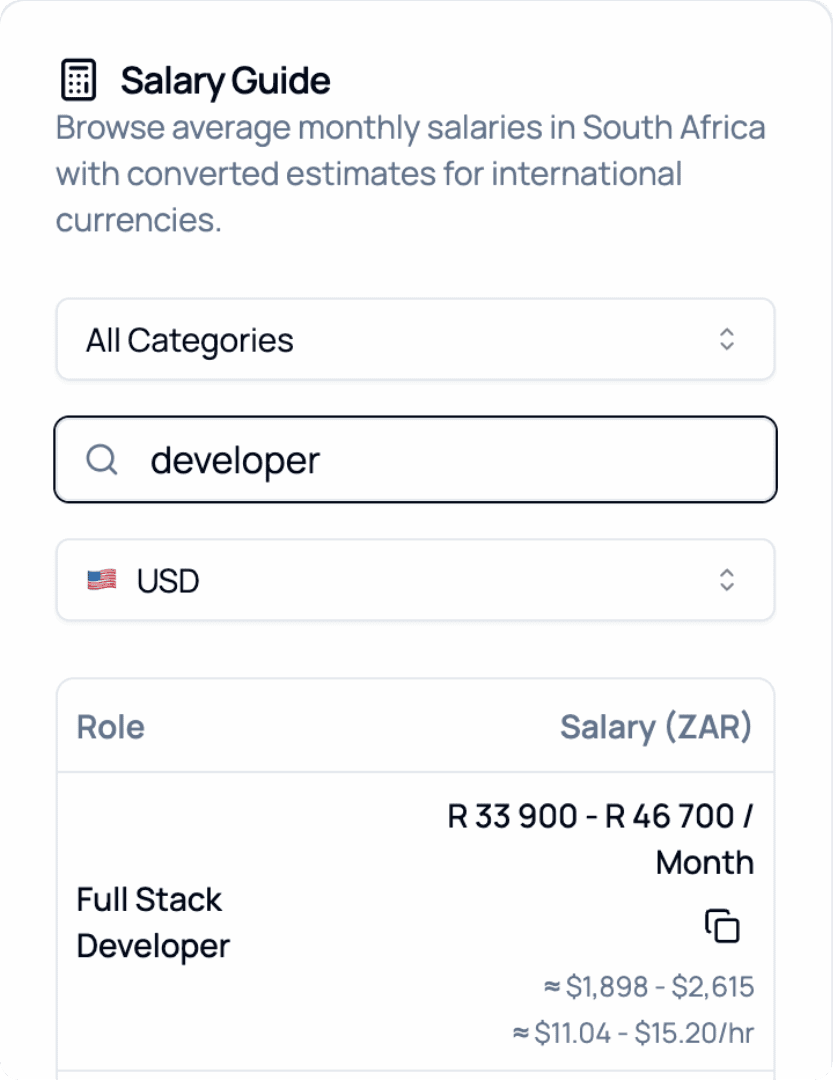
2026 Salary Guide: South Africa
Discover South African Salaries by Role. Compare costs and see how much you can save.