TL;DR
Learn what a legal intake specialist does, which qualifications matter, and how to design an intake system that protects ethics while increasing signed matters.
Use a practical framework for scripts, SLAs, CRM stages, and escalation rules so intake quality is consistent across every lead source.
Benchmark the KPIs that actually predict growth, including speed-to-lead, consultation show rate, qualified-case rate, and retained-client conversion.
Table of Contents
- Introduction
- What does a legal intake specialist do in a US law firm?
- What qualifications should you look for in a legal intake specialist?
- How do you build a legal intake process that improves conversion and compliance?
- Which tools and KPIs matter most for legal intake specialists?
- Should you hire in-house or remote legal intake specialist support?
- Final Thoughts
Introduction
Most law firm growth plans fail at the same place: not marketing, not attorney skill, but intake execution. Firms spend heavily to generate leads, then lose qualified matters because calls are missed, follow-ups are late, or screening is inconsistent. If your team is evaluating a dedicated legal intake specialist model, treat intake as an operating system, not a receptionist task.
That shift starts with a clear role design and a measurable workflow. HireSava's legal hiring overview is useful context, but this guide focuses specifically on legal intake specialization for US firms. The goal is simple: faster response times, cleaner qualification, stronger client experience, and more signed retainers without crossing ethics boundaries.
This playbook is written for solo firms, plaintiff practices, defense boutiques, and multi-office legal teams that need practical implementation detail. We will cover what a legal intake specialist actually does, what to hire for, how to build compliant scripts and handoffs, which tools and KPIs matter, and whether in-house or remote staffing is the better model for your current stage.
To keep this guide practical, we also reference external benchmarks and policy sources, including the American Bar Association Model Rules, Clio's Legal Trends reporting, Thomson Reuters legal operations insights, Nolo's legal market consumer behavior resources, and US labor data from the Bureau of Labor Statistics.
If you are building the surrounding staffing stack, pair this post with Paralegal vs. Legal Assistant for US Companies, 5 Ways a Document Review Service Saves Your Law Firm, 12 Legal Tasks to Outsource for Firm Efficiency, How to Hire Remote Talent Without Recruiting Fees, and Virtual Assistant Onboarding Checklist for 2026.
What does a legal intake specialist do in a US law firm?
Snippet answer: A legal intake specialist manages the first 24 to 72 hours of lead handling, including response, screening, scheduling, follow-up, and handoff, so qualified prospects move quickly to attorney consultation and signed engagement.
A high-performing legal intake specialist is not only answering phones. They run a conversion-critical workflow at the top of your revenue funnel. In many firms, this role directly impacts retained-case volume more than any single marketing channel change.
Core responsibilities typically include:
- Immediate lead response from calls, form fills, chat, and referral sources
- Structured pre-qualification using your firm-specific criteria
- Conflict-check initiation and data capture accuracy review
- Consultation scheduling and no-show prevention workflows
- Follow-up cadence for prospects not ready to retain on day one
- Empathetic expectation-setting without giving legal advice
- Clean handoff notes for attorneys and case managers
- Lead-source and stage tracking inside your CRM
Think about the economics. If your attorneys bill high-value work, every minute spent on unstructured lead triage is expensive. A legal intake specialist protects attorney focus by filtering noise, documenting essentials, and escalating only qualified opportunities.
The operating boundary that protects ethics
US firms must separate intake support from legal advice. Under the ABA framework, non-lawyer staff can gather facts, explain process, and schedule next steps, but they should not provide legal opinions or strategy recommendations. This aligns with attorney supervision duties under ABA Model Rule 5.3 and communication standards under Rule 7.3 solicitation guidance.
In practical terms, your legal intake specialist should be trained to:
- Confirm facts and timeline, not liability conclusions
- Explain next process steps, not predicted legal outcomes
- Escalate legal judgment questions to licensed attorneys immediately
- Use approved scripts and call notes for quality consistency
Why intake quality changes client trust
For prospective clients, intake is the first legal service experience. Response speed and communication clarity shape trust before any attorney consult happens. Clio and multiple legal marketing studies consistently show that delayed response is one of the biggest reasons firms lose qualified matters.
A legal intake specialist should therefore operate with specific service-level agreements (SLAs), such as:
- New inbound call pickup rate target by hour block
- Web-form first response within 5 to 10 minutes during business hours
- Missed-call callback within 10 to 15 minutes
- Consultation reminder cadence at 24 hours and 2 hours pre-meeting
- Unretained prospect reactivation sequence over 14 to 30 days
When those standards are documented and monitored, conversion improves for the simplest reason: prospects feel attended to.
What qualifications should you look for in a legal intake specialist?
Snippet answer: The best legal intake specialist combines legal-process literacy, high-empathy communication, CRM discipline, and script compliance under pressure, with measurable proof of conversion or scheduling performance.
Many firms over-index on years of "office experience" and under-index on conversion behavior. A strong legal intake specialist should be assessed like a client-facing revenue role with ethics constraints.
Must-have capability profile
Prioritize these competencies:
- Structured communication: can ask exact screening questions without sounding robotic
- Active listening: captures facts, pain points, and urgency clearly
- De-escalation ability: remains calm with distressed or frustrated callers
- Process discipline: follows scripts, conflict protocols, and note standards
- CRM fluency: enters complete, accurate data in real time
- Time management: handles multi-channel queues without dropped follow-up
- Coachability: incorporates QA feedback quickly and consistently
Legal-sector familiarity helps, especially for personal injury, family law, immigration, workers' compensation, criminal defense, or mass tort pipelines. But trainability and process adherence often matter more than industry tenure.
Interview design that predicts performance
Avoid generic interviews. Use scenario-based testing tied to actual intake workflow.
Sample practical interview exercises:
- Role-play a first call from an emotional prospect with incomplete facts.
- Ask the candidate to summarize the call in CRM-note format.
- Run a mock conflict-check intake and identify missing data points.
- Evaluate a follow-up email draft for tone, clarity, and legal-safety language.
- Test scheduling accuracy across time zones and attorney availability rules.
What you are measuring is not charisma alone. You are measuring whether the candidate can preserve empathy and accuracy under time pressure.
Scorecard example for final selection
Use a weighted rubric so hiring decisions are consistent:
- Communication clarity and empathy: 25%
- Screening accuracy and judgment boundaries: 20%
- CRM and documentation quality: 20%
- Conversion mindset and follow-up discipline: 20%
- Team fit and coachability: 15%
A structured scorecard reduces bias and aligns hiring with firm outcomes.
Red flags that predict intake failure
Watch for these warning signs:
- Describes intake as only "answering phones"
- Avoids process metrics or cannot discuss prior KPIs
- Overpromises legal outcomes in role-play scenarios
- Writes vague notes without timeline, incident details, or urgency markers
- Treats follow-up as optional rather than systemized
If you see these patterns early, you are likely avoiding churn and conversion loss later.
For staffing alternatives and role design support, many firms use specialized talent pathways through HireSava's legal industry page, role context like remote paralegal support, and a broader framework from what is an onshore and offshore team.
How do you build a legal intake process that improves conversion and compliance?
Snippet answer: Build intake as a documented pipeline with scripted stages, response-time SLAs, conflict and consent checkpoints, and attorney-supervised escalation rules so every lead is handled consistently and safely.
Most law firms lose opportunities because intake lives in individual habits instead of a shared system. Your legal intake specialist can only perform at scale when workflow rules are explicit.
Step 1: Define your intake pipeline stages
Use clear stages inside your CRM. A practical baseline:
- New lead captured
- First contact attempted
- Screened and qualified
- Conflict check in progress
- Consultation scheduled
- Consultation completed
- Retained
- Not retained with reason code
Every lead should sit in exactly one stage at a time. This creates accountability and clean reporting.
Step 2: Create script packs by practice area
One script does not fit all matters. A legal intake specialist needs modular scripts:
- Initial call script by practice area
- Web-lead callback script
- Disqualified-lead referral script
- Consultation reminder and no-show rescue script
- Post-consultation follow-up script
Each script should include:
- Required data fields
- Empathy statements for high-stress situations
- Prohibited language (no legal advice or guarantees)
- Escalation phrases when attorney input is required
This protects quality and keeps the role within compliance boundaries.
Step 3: Enforce response-time standards
Speed-to-lead is frequently the top conversion variable. Even excellent call quality cannot recover long delays.
A practical SLA framework:
- Calls: answer live when possible; callback within 10 minutes
- Forms/chat: first outreach within 10 minutes during staffed hours
- After-hours: automated acknowledgement plus next-business-window follow-up
- Reattempt cadence: at least 5 to 7 attempts across channels over 14 days
Document these standards and review adherence weekly.
Step 4: Build compliance checkpoints into workflow
Intake compliance is easier when it is embedded, not bolted on.
Required controls usually include:
- Conflict-check trigger before consultation confirmation
- Consent language for communication channels (phone/text/email)
- Privacy statement delivery and documentation
- No-advice boundary reminders in scripts
- Supervisory review process for edge-case calls
If your firm handles sensitive data categories, ensure intake documentation follows jurisdictional privacy and record-keeping rules. For governance models, review state bar guidance and practical controls aligned with ABA legal ethics resources.
Step 5: Run a 30-60-90 rollout for new specialists
A predictable onboarding rhythm improves ramp speed.
Days 1-30:
- Systems access, script mastery, supervised call handling
- Daily QA reviews and coaching
- Focus on data accuracy and escalation boundaries
Days 31-60:
- Expanded channel ownership (form leads, chat, callbacks)
- KPI targets introduced
- Weekly quality calibration with attorneys
Days 61-90:
- Full queue ownership by lane
- A/B testing of script variants
- Conversion and retention impact reporting
This phased rollout prevents early chaos and makes coaching objective.
Which tools and KPIs matter most for legal intake specialists?
Snippet answer: The most important stack combines legal CRM, call intelligence, scheduling, and automation tools, while the most predictive KPIs are speed-to-lead, contact rate, consultation show rate, retained conversion, and time-to-sign.
Many firms track vanity metrics, like total leads, without measuring whether intake execution is healthy. A legal intake specialist needs tools and KPIs tied to decisions.
Tool stack categories that usually matter
You do not need an enterprise budget, but you need clear system ownership.
Recommended categories:
- Legal CRM and intake pipeline tracking (for stage management and notes)
- Cloud telephony with recording and disposition codes
- Shared scheduling with consultation rules and reminders
- E-signature and engagement letter workflows
- SMS/email automation for reminders and follow-up sequences
- QA dashboards for call scoring and SLA adherence
Common systems firms evaluate include Clio Grow, Lawmatics, MyCase, PracticePanther, RingCentral, Dialpad, and e-signature platforms. The right choice depends less on brand and more on whether intake stages and automation can be configured to your practice-specific rules.
KPI framework every intake dashboard should include
Track these weekly and monthly:
- Speed-to-lead: median minutes from lead arrival to first human response
- Contact rate: percentage of leads reached live or by confirmed response
- Qualified lead rate: percentage meeting your minimum case criteria
- Consultation set rate: percentage of qualified leads scheduled
- Consultation show rate: percentage attending the scheduled consultation
- Retained conversion rate: percentage of consultations signed
- Time-to-sign: median days from first contact to engagement
- No-response and no-show reasons: coded root-cause categories
These metrics create a closed loop. You can identify exactly where leakage occurs and improve that stage.
Practical QA system for intake calls
A legal intake specialist should receive structured QA, not general feedback. Use a 100-point scorecard:
- Opening and rapport: 15 points
- Fact gathering completeness: 25 points
- Script and compliance adherence: 20 points
- Scheduling and next-step clarity: 20 points
- Notes quality and disposition accuracy: 20 points
Review a consistent sample (for example, 5 to 10 calls per specialist per week). Pair score trends with KPI trends. If show rate drops while opening scores remain high, your reminder workflow may be the issue, not your call empathy.
Reporting cadence that drives action
Use a simple cadence:
- Daily: queue backlog, SLA misses, urgent escalations
- Weekly: conversion by channel and specialist, QA trends, process blockers
- Monthly: retained-client trend, source ROI, staffing and capacity decisions
Teams that stick to this rhythm usually solve intake problems faster because ownership is explicit.
For firms modernizing their remote operations stack, related frameworks in How to Hire a Virtual Assistant for Small Business and How to Hire Remote Talent Without Recruiting Fees can help with tool governance and onboarding standards.
Should you hire in-house or remote legal intake specialist support?
Snippet answer: Choose in-house when local walk-in traffic and complex on-site coordination dominate; choose remote when speed, coverage windows, and cost-efficient scalability are higher priorities and your workflow is already documented.
This is not an ideology decision. It is a workflow and economics decision.
When in-house intake is the better fit
In-house can be stronger if your firm depends on:
- High volume of walk-ins needing immediate physical coordination
- Frequent in-office document handling at intake stage
- Sensitive local community relationships requiring face-to-face continuity
- Minimal process maturity where live supervision is still essential
For some firms, especially early-stage practices with undefined SOPs, in-house setup may reduce change complexity.
When remote intake support is the better fit
Remote legal intake specialist models typically win when you need:
- Faster response coverage across early morning, evening, or weekend windows
- Scalability without long local hiring cycles
- Lower fully loaded staffing cost while maintaining quality controls
- Multi-channel follow-up execution (call, text, email) with strict SLAs
When process documentation exists, remote teams can outperform ad hoc local workflows because tasks are systemized and measurable.
Cost and capacity perspective
Using BLS wage context for legal support roles and current legal operations benchmarks, many US firms see that fully loaded local hiring can exceed direct salary by a meaningful margin once benefits, payroll taxes, space, and tooling are included. Remote models can reduce that burden and reallocate budget toward conversion tooling, QA, and attorney capacity.
That said, cheapest is not always best. The right decision is whichever model gives you reliable conversion lift while maintaining compliance and client experience.
Hybrid model often delivers the best of both
A practical middle ground:
- In-office coordinator handles walk-ins and physical packet logistics
- Remote legal intake specialist handles first-response queue, callbacks, reminders, and structured follow-up
- Shared CRM and QA standards unify both lanes
This hybrid design is increasingly common because it protects local experience while extending response coverage and consistency.
If you are evaluating remote legal support beyond intake, compare adjacent role paths through HireSava's legal solutions, remote paralegal options, and process-heavy support models in document preparation and review workflows.
Final Thoughts
A legal intake specialist is one of the highest-leverage hires a growth-focused law firm can make. Intake quality determines whether your marketing spend becomes signed matters or lost opportunities.
The firms that win do three things well:
- They define intake as a supervised system, not a personality-dependent task.
- They measure conversion and compliance with disciplined KPIs.
- They align staffing model choices (in-house, remote, or hybrid) with actual workflow needs.
If your conversion is inconsistent today, do not start by buying more leads. Start by rebuilding the first 72 hours of your intake experience with clear scripts, strict SLAs, and accountable reporting. Once that foundation is stable, every future marketing dollar works harder.
For legal operators planning next-step implementation, begin with your legal growth roadmap, then set a 30-day intake audit covering response time, qualification consistency, consultation show rate, and retained conversion by source. That audit will show exactly where your next margin gains are hiding.
Explore related hiring options
Useful next pages based on this article's topic:
- Remote Paralegal role — case support, research, and document workflows
- Legal Document Preparation service — drafting and filing support for legal teams
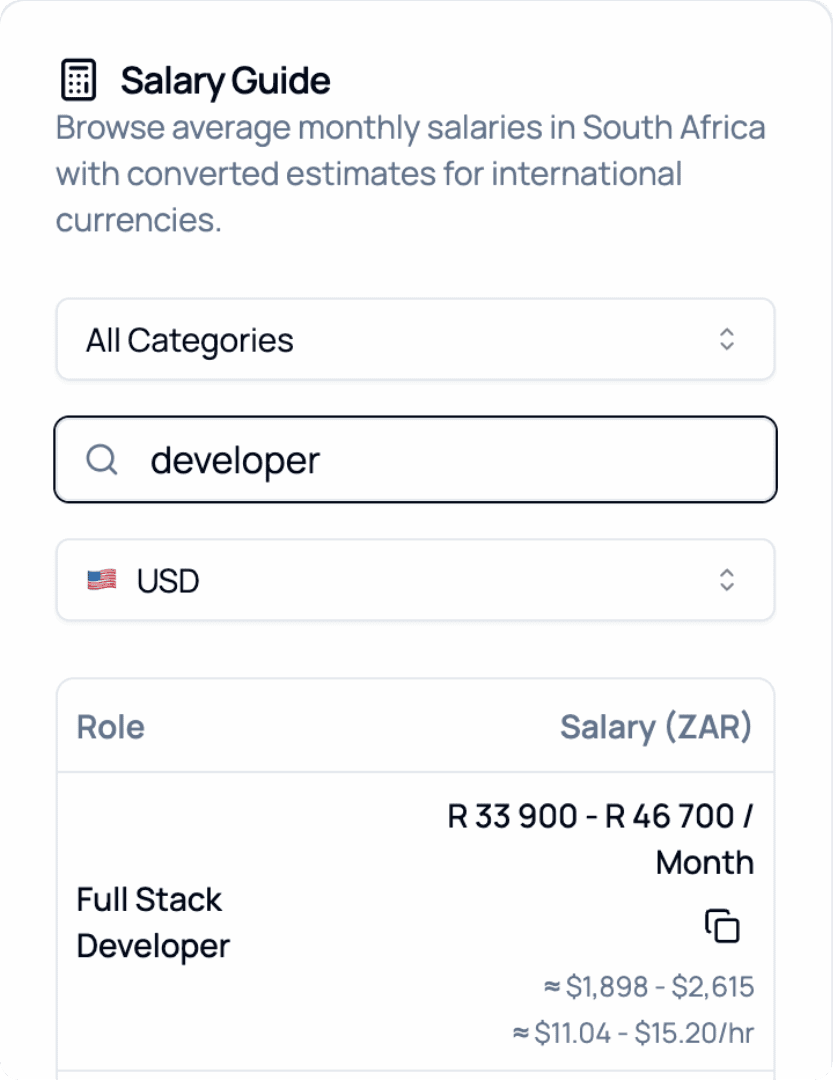
2026 Salary Guide: South Africa
Discover South African Salaries by Role. Compare costs and see how much you can save.